Here's a video of the Edel Wedge fitting process for the new line of wedges from Edel Golf.
3JACK
Monday, January 23, 2012


Thursday, January 19, 2012
2012 PGA Merchandise Show Preview
Next week, the PGA will be having their annual PGA Merchandise Show in Orlando from January 25th thru January 28th. 3Jack Golf will be attending the event.

We will be having a ‘Tweet Up’ at the Brickhouse Tavern and Tap, right on I-Drive, about a mile from the Orange County Convention Center. It will be on Thursday (Jan 26th) night at 8pm. For directions, go to:
http://brickhousetavernandtap.com/locations/orlando/
You can also e-mail me at Richie3Jack@yahoo.com

The first day will be the ‘Demo Day’ portion of the PGA Show. For those who have never been there, it’s held at Orange County National Golf Club’s driving range which was rated the Best Driving Range in the County by GOLF Magazine. It’s a giant, circular range and the every square inch of it has a tent where people can demo new equipment.

Last year, the highlights for me were the following:
- Graphite Design Tour AD-DI shafts
- Oban Devotion shafts
- Fourteen Golf Wedges
- Wilson Staff Wedges
- Bettinardi Putters
- Heavy Golf Wedges and Drivers
- Callaway Razr irons and driver
- KBS Hybrid Shaft
- Miura K-Grind Wedge (which I now own)
- Prazza Golf Ball
- Foresight Sports Launch Monitor
- TourStriker
After that I spent the entire day Thursday at the actual show. Then Friday I took off to play some golf instead (weather was beautiful that day). The weather this winter has been good in Florida, but they are predicting scattered showers on Demo Day. If so, I probably will not show up to Demo Day and schedule to be at the show on Friday instead.
Last year I talked with some people from Trackman and FlightScope at the show. I also found the HIRZL glove at the show and discussed some things with putting with David Edel (Edel Golf) and wound up buying a putter. After that I spoke to the AimPoint guys like John Graham, Jamie Donaldson and Mark Sweeney.
The actual show is like a smorgasbord of golf. They have every type of golf club one could want, along with training aids, universities with PGM programs, retailers for driving ranges, golf vacation packages, etc.
Here’s what I’m interested in this year:
1. Driver Shafts
I should be getting Wishon Golf’s Shaft Bend Profile software sometime this week along with his book ‘In Search of the Perfect Driver.’ I plan on going thru the software and making note of any companies who have a shaft that is not in the current version of the Shaft Bend Profile software.
2. Yonex

They were at the show last year, but they didn’t have their new E-Zone equipment there.
3. Other Equipment I Have Yet to Demo
Here are a few clubs I’m interested in:
Ping G20 driver
Titleist 712 blades
Bridgestone irons and woods
Taylor Made RBZ
Adams UL woods
Scratch Golf SB-1
Cobra S3 woods
4. Edel Wedges

Edel wedges are a very different design from the typical OEM designed wedges and due to that, they usually prescribe a much, much higher bounce angle for their wedges than people are used to. I’ll have to learn more about them.
5. Tour Striker
Rumor of a Tour Striker driver coming out at the show.
If you have any other things you may be interested in, please let me know.
3JACK
We will be having a ‘Tweet Up’ at the Brickhouse Tavern and Tap, right on I-Drive, about a mile from the Orange County Convention Center. It will be on Thursday (Jan 26th) night at 8pm. For directions, go to:
http://brickhousetavernandtap.com/locations/orlando/
You can also e-mail me at Richie3Jack@yahoo.com
The first day will be the ‘Demo Day’ portion of the PGA Show. For those who have never been there, it’s held at Orange County National Golf Club’s driving range which was rated the Best Driving Range in the County by GOLF Magazine. It’s a giant, circular range and the every square inch of it has a tent where people can demo new equipment.
Last year, the highlights for me were the following:
- Graphite Design Tour AD-DI shafts
- Oban Devotion shafts
- Fourteen Golf Wedges
- Wilson Staff Wedges
- Bettinardi Putters
- Heavy Golf Wedges and Drivers
- Callaway Razr irons and driver
- KBS Hybrid Shaft
- Miura K-Grind Wedge (which I now own)
- Prazza Golf Ball
- Foresight Sports Launch Monitor
- TourStriker
After that I spent the entire day Thursday at the actual show. Then Friday I took off to play some golf instead (weather was beautiful that day). The weather this winter has been good in Florida, but they are predicting scattered showers on Demo Day. If so, I probably will not show up to Demo Day and schedule to be at the show on Friday instead.
Last year I talked with some people from Trackman and FlightScope at the show. I also found the HIRZL glove at the show and discussed some things with putting with David Edel (Edel Golf) and wound up buying a putter. After that I spoke to the AimPoint guys like John Graham, Jamie Donaldson and Mark Sweeney.
The actual show is like a smorgasbord of golf. They have every type of golf club one could want, along with training aids, universities with PGM programs, retailers for driving ranges, golf vacation packages, etc.
Here’s what I’m interested in this year:
1. Driver Shafts
I should be getting Wishon Golf’s Shaft Bend Profile software sometime this week along with his book ‘In Search of the Perfect Driver.’ I plan on going thru the software and making note of any companies who have a shaft that is not in the current version of the Shaft Bend Profile software.
2. Yonex
They were at the show last year, but they didn’t have their new E-Zone equipment there.
3. Other Equipment I Have Yet to Demo
Here are a few clubs I’m interested in:
Ping G20 driver
Titleist 712 blades
Bridgestone irons and woods
Taylor Made RBZ
Adams UL woods
Scratch Golf SB-1
Cobra S3 woods
4. Edel Wedges
Edel wedges are a very different design from the typical OEM designed wedges and due to that, they usually prescribe a much, much higher bounce angle for their wedges than people are used to. I’ll have to learn more about them.
5. Tour Striker
Rumor of a Tour Striker driver coming out at the show.
If you have any other things you may be interested in, please let me know.
3JACK
Wednesday, January 18, 2012
3Jack Golf 2012 PGA Tour Rundown - Week 2
Here were my picks for the Sony and how they finished:
Brian Gay: t-6th
David Hearn: t-10th
Carl Pettersson: t-2nd
Scott Piercy: t-23rd
Jerry Kelly: t-29th
Blake Adams: MC
Here’s the top-5 finishers at the Hyundai and their current rankings:
ATD = Advanced Total Driving
PG = Putts Gained
SG = Short Game Play (0-20 yards)
BZ = Birdie Zone (75-125 yards)
SZ = Safe Zone (125-175 yards)
DZ = Danger Zone (175-225 yards)
……………………….......ATD……PG…...SG…..BZ……SZ….DZ
Johnson Wagner……111……..6……...41……33……69…..59
Carl Pettersson……...36……..33……86…….4……..28…...3
Sean O’Hair…………....72……..68……15……61…...116….117
Harrison Frazar………,24……..46…….99…...73…….30…..37
Charles Howell III…..94……..10……16…....22…….29…..58
And here’s my picks for the Humana in La Quinta, CA:
Ryan Palmer: 50/1
Harrison Frazar: 50/1
Kyle Stanley: 66/1
Martin Laird: 25/1
Robert Garrigus: 80/1
Value Pick: Kevin Chappell: 125/1
Since we only have 153 golfers who have qualified statistically so far, I will just give the top-10 and bottom-10 in each metric:
ADVANCED TOTAL DRIVING
1. John Senden
2. Graham DeLaet
3. Vijay Singh
4. David Hearn
5. Heath Slocum
6. Paul Goydos
7. Kyle Stanley
8. Roberto Castro
9. Roland Thatcher
10. Jason Kokrak
131. Patrick Sheehan
132. Chad Collins
133. Tommy Biershenk
134. Kevin Kisner
135. Matt Bettencourt
136. Daniel Chopra
137. Joe Ogilvie
138. Parker McLachlin
139. Edward Loar
140. Derek Lamely
PUTTS GAINED (VIA PGATOUR.COM)
1. David Hearn
2. Jesper Parnevik
3. Hunter Haas
4. Jeff Maggert
5. Brendon Todd
6. Johnson Wagner
7. Michael Thompson
8. J.J. Killeen
9. Danny Lee
10. Charles Howell III
144. Ricky Barnes
145. Miguel Tabuena
146. Jason Bohn
147. Ryo Ishikawa
148. WC Liang
149. Gary Christian
150. Jason Dufner
151. Stephen Gangluff
152. Heath Slocum
153. Roland Thatcher
ADJUSTED SHORT GAME PLAY
1. Miguel Tabuena
2. Jim Carter
3. Stephen Gangluff
4. William McGirt
5. Martin Laird
6. Tadd Fujikawa
7. Jason Dufner
8. John Merrick
9. Steve Stricker
10. Troy Kelly
144. Davis Love III
145. Martin Flores
146. Billy Hurley III
147. Gary Woodland
148. Kyle Thompson
149. Ken Duke
150. Tommy Gainey
151. Ricky Barnes
152. Richard H. Lee
153. Gary Christian
BIRDIE ZONE PLAY
1. Colt Knost
2. Ricky Barnes
3. Stephen Ames
4. Carl Pettersson
5. Shane Bertsch
6. Graham DeLaet
7. Paul Goydos
8. Greg Owen
9. Erik Compton
10. John Rollins
81. WC Liang
82. Tommy Biershenk
83. Tadd Fujikawa
84. Harris English
85. Sunghoon Kang
86. Jhonattan Vegas
87. Jason Bohn
88. Kevin Kisner
89. Ben Crane
90. Jason Kokrak
SAFE ZONE PLAY
1. John Mallinger
2. Michael Thompson
3. Russell Knox
4. Corey Pavin
5. Justin Leonard
6. Tadahiro Takayama
7. Alexandre Rocha
8. Jeff Maggert
9. Jim Carter
10. Troy Matteson
142. Seung-yul Noh
143. Kevin Kisner
144. Matt Bettencourt
145. Mark Anderson
146. Danny Lee
147. Ryan Palmer
148. Gary Woodland
149. Derek Lamely
150. Richard H. Lee
151. Gary Christian
DANGER ZONE PLAY
1. Brendan Steele
2. Bryce Molder
3. Carl Pettersson
4. Alex Aragon
5. Pat Perez
6. William McGirt
7. Zach Johnson
8. Tommy Gainey
9. Chris Stroud
10. Kris Blanks
144. Danny Lee
145. Bud Cauley
146. Troy Kelly
147. John Merrick
148. Patrick Sheehan
149. Shigeki Maruyama
150. Parker McLachlin
151. Richard H. Lee
152. Derek Lamely
153. Russell Knox
3JACK
Tuesday, January 17, 2012
Wishon 919THI Driver Video and New 2012 Products
Here’s a video from Tom Wishon on his 919THI driver
Wishon Golf has come out with some new products for 2012 that just look fantastic. Like their new 575MMC model of irons.

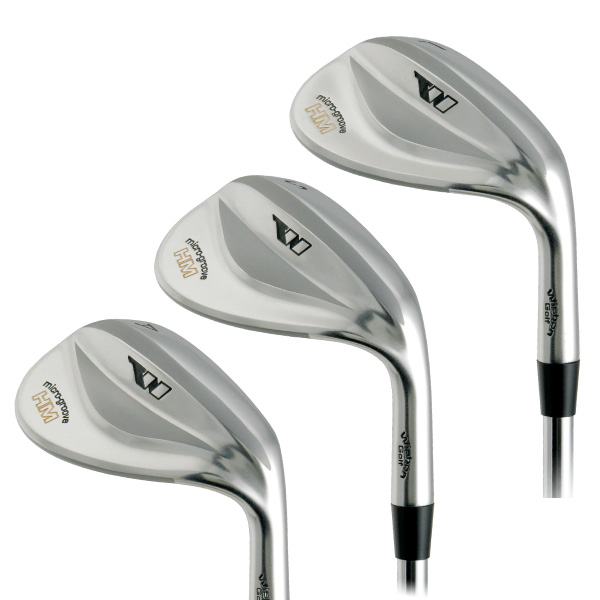
Their new Micro Groove HM wedges
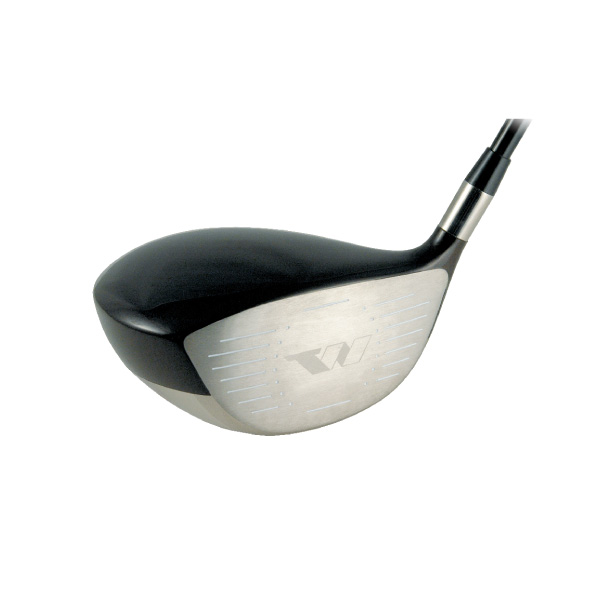
And their new 739 CCG driver
By itself, I’ve found Wishon Golf’s equipment to be top of the line products. I currently own their 919THI driver, the 929HS 3-wood (COR the same as a driver at .830, same thing the Taylor Made RBZ is doing) and their 555C and 555M irons. I will also be getting their 775HS hybrid (COR at .830) in the mail soon.
However, Wishon Golf’s equipment is actually designed with MOI Matching in mind. So when you combine its equipment with the MOI fitting and matching process, you are truly bagging superior equipment. The link below is to my Wishon clubmaking and MOI services:
3JACK GOLF CLUBFITTING AND CLUBMAKING SERVICES
3JACK
Wishon Golf has come out with some new products for 2012 that just look fantastic. Like their new 575MMC model of irons.
Their new Micro Groove HM wedges
And their new 739 CCG driver
By itself, I’ve found Wishon Golf’s equipment to be top of the line products. I currently own their 919THI driver, the 929HS 3-wood (COR the same as a driver at .830, same thing the Taylor Made RBZ is doing) and their 555C and 555M irons. I will also be getting their 775HS hybrid (COR at .830) in the mail soon.
However, Wishon Golf’s equipment is actually designed with MOI Matching in mind. So when you combine its equipment with the MOI fitting and matching process, you are truly bagging superior equipment. The link below is to my Wishon clubmaking and MOI services:
3JACK GOLF CLUBFITTING AND CLUBMAKING SERVICES
3JACK
Monday, January 16, 2012
2011 Pro Golf Synopsis FAQ's
I’ve received some questions about the strategy portion from the 2011 Pro Golf Synopsis e-book. So, let me do some FAQ’s in this blog post.
Are you stating that golfers should play more conservatively?
No….hell no. The strategy of Pro Golf Synopsis is about playing for your ‘average swing.’ The problem that golfers suffer from is that they will do the exact opposite. They will either play for their ‘worst swing’ or their very ‘best swing.’
For example, I feel my ‘average swing’ with the driver will find an average size fairway about 80% of the time and will travel about 280-290 yards. An average swing with the driver for me will probably produce a very poor shot about 5% of the time and the ball usually fades.
Let’s say we have a par-4 like #3 at North Shore Golf Club:

What we want to do is play for the result of our average swing. The designer (Jeff Burton) made this hole long and has the green off to the right. So a golfer who hits a driver well and comes closer to the water will have a shorter shot into the green.
Most golfers play for their worst swing and aim well left. Some golfers play for their best swing and really try to hug the water. The problem with playing for the worst swing is even if you hit the drive well, you will likely be further away from the hole and you are effectively increasing your ‘expected score’ than if you had played for your ‘average swing.’ Even getting 15 yards closer to the cup lowers the golfer’s ‘expected score.’ All things being equal, I would rather hit an 8-iron into a green than a 7-iron or a 6-iron.
Conservative play is also a detriment to ‘going low’ and you can piss away those rounds where you are have your ‘A Game’ or even worse, when you are in the zone.
I don’t believe that the Danger Zone is my issue. I think I lose more shots with my driving or putter. Should I still work on Danger Zone play?
The strategy in Pro Golf Synopsis is not about labeling certain parts of the game as ‘important’ or ‘unimportant.’ If I can improve my fairway bunker play from average to ‘World Class’, that will improve my scores over time (provided everything else remains the same). However, fairway bunker play will not have as big of an impact on your scores than if I had gone from average to ‘World Class’ in driving the golf ball.
Furthermore, as the player metrics in PGS show, there are some great Danger Zone players who lost their Tour card. Boo Weekley was excellent in Danger Zone play and driving the golf ball. But, he was dead last in putting. I wouldn’t tell Boo Weekley he needs to improve his Danger Zone play.
The problem with amateurs is that they often misjudge the value of the shots they hit with the driver. If a golfer hits a poor driver on a hole and make a double bogey, they’ll claim that for the round, the driver cost them ‘2 strokes.’ In reality, the driver probably cost them 1 stroke and their shots following the driver were poor and those shots cost them 1 more stroke.
However, what they forget is that the good drives they hit in the round also have ‘value’ to them as well. That 300-yard drive that you piped down the middle of the fairway has a positive value to it compared to that 270 yard drive that went into the woods. The difference between drivers and Danger Zone play is that you have a chance to ‘make up’ for a bad drive with another 13 drivers in the round. Thus, you may hit your driver on the 1st hole into the woods and that may cost you 1-stroke. But then you can go and hit the next 13 drivers as well as you can hit them and that will more than make up for that lost stroke.
Conversely, you may only get 4 shots from the Danger Zone the entire round. If your first Danger Zone shot costs you 1-stroke, then you only have 3 more Danger Zone shots and it’s more likely that you will never ‘make up for’ that first Danger Zone shot that cost you 1-stroke.
I’ll leave it with this…

I believe that the practice I set forth in 2011 PGS is sound in theory. I do believe in practicing with your longest iron the most on the range because if a person can hit a 3-iron, they certainly can hit the rest of the irons well. Also, the practice set forth does include hitting the driver, but to really focus on the tough tee shots you may face and try to visualize those on the range so it becomes easier when y ou get on the course.
I have a problem where for whatever reason, I cannot take my ‘average swing’ on a particular hole on the course because it does not fit my eye. What should I do?
I believe that this is good that your recognize that a certain hole does not fit your eye. I think that since you are armed with this knowledge, there are a few things you can do. For starters, you can now go onto the range and visualize this shot and try to ‘simulate’ the shot so it becomes easier to hit on the course.
Secondly, we now have to adjust the result of our ‘average swing’ for THIS particular shot. Essentially, for this particular shot our ‘average swing’ has changed. Our ‘average swing’ for this particular shot is not nearly as good as our average swing elsewhere. If there’s water on the right side of the hole and we struggle with this tee shot, we now have to adjust our aim further away from the water because the average swing we produce on this tee shot is not nearly as good as our average swing elsewhere on the course.
Lastly, we need to gauge the risk and reward of the shot and plan our strategy from there. Take a look at #12 at North Shore.

There is a big oak tree where the 153 marker is at. IMO, the best play is to hit a 3-wood off the tee because the fairway is only about 12 yards wide right where that large oak tree is. If I hit a good 3-wood down the middle, I’ll be far enough behind the oak tree that I can take a full swing and the ball will fly below the oak tree.
The problem is that I do not hit the 3-wood well on this hole. I plan on working diligently on my 3-wood play this year so this shot is easier for me. But for now I just try to treat this hole with the mindset of it being a par-5 and using a driver off the tee. This way if I hit a driver well and down the middle, I’m now ‘playing for a birdie-4’ (technically it’s a par because it’s a par-4). If my driver winds up in the woods, then I’m ‘playing for a par-5.’
Before I started to theorize about course management, I would either stubbornly hit poor 3-woods off the tee or hit the driver in the woods and then ‘try to hard’ to make a par-4 instead of just punching out and taking my medicine and making a bogey-5. What would often wind up happening is I would make a double bogey-6 and double bogeys are KILLERS to good golf rounds.
I don’t see why you use ‘Proximity to the Cup’ to judge players from the Zones because often times players are just trying to hit the green safely instead of shooting for the flag.
The problem with a metric like ‘Greens In Regulation’ is that it is too vague and incomplete for our use. I have played better rounds of golf hitting few greens than the times that I have hit almost every green and vice versa. And in the end, GIR does not really help in explaining where strokes are lost or gained.
The thing with the PGA Tour is that over the course of a year, every player gets their fair share of shots where they have to seriously consider just aiming for the middle of the green instead of shooting at the flag. But, over the course of time, the players who can hit the ball closer to the cup will see their scores drop.
It’s like I mentioned in 2011 PGS, we are talking about probability, not certainty. That means there is no guarantee that a particular outcome will happen every time, but we do want to put the odds in our favor because over time, it will work out in our favor.
This is somewhat similar to the principle that the Blackjack ‘card counters’ use in casinos. The card counter knows that if they card count correctly every single time, they are shifting the odds in their favor. Now, those odds may be in their favor by only…say, 2%. Thus, they will often lose a lot of hands. But, if they keep at it…over time they will win money. And that’s why casinos kick skilled card counters out of their casinos.
Still, we use the GIR metric to some use. For instance, Shane Bertsch finished:
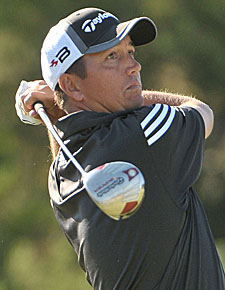
6th in Birdie Zone
6th in Safe Zone
44th in Danger Zone
But, he was 126th in Greens in Regulation (64.3%). He also finished 82nd in Putts Gained. Perhaps, Bertsch was firing at the flagstick a little too often and while he was hitting shots closer to the cup, they were off the green or he was leaving himself with a slick, downhill putt.
Brandel Chamblee says that the ‘Money Zone’ is from 50-125 yards and has some players that won multiple times in 2011 to prove it. Is he right?
Chamblee is wrong because statistically it does not correlate to Adjusted Scoring Average as strong as putting, driving the ball, Danger Zone play, Safe Zone play and even Short Game play.
It’s a mathematical FACT. Much like arguing against D-Plane when it comes to the physics of how the ball flies.
There are a few common flaws in Chamblee’s thinking. For starters, the sample size is not big enough. You can’t take one year and look at a few of the players in the top and then make the judgment of how important that area of the game is. David Duval finished 3rd in Birdie Zone play and was 174th in Adjusted Scoring Average. John Senden finished 184th in Birdie Zone play and was 25th in Adjusted Scoring Average.
Secondly, the flaw in using the 50-125 yard metric is that if a player has more shots closer to the cup, they are more likely to going to hit those shots closer. If all of Dustin Johnson’s shots are from 55 yards and all of Luke Donald’s shots are from 125 yards, Dustin Johnson will likely wind up with a closer Proximity to the Cup. That doesn’t make Dustin a better player from this range. With the 2011 Pro Golf Synopsis, I utilize formulas that essentially ‘cancel out’ the differences in the yardages where the shot was taken from.
Lastly, just looking at the shots from 50-125 yards does not consider other parts of the player’s game. Luke Donald and Shane Bertsch are a good example.
Here’s a look at their rankings in each Zone and their driving of the ball:
DONALD
Safe Zone: 1st
Birdie Zone: 1st
Danger Zone: 46th
Adjusted Total Driving: 132nd
BERTSCH
Safe Zone: 6th
Birdie Zone: 6th
Danger Zone: 44th
Adjusted Total Driving: 97th
So why is Bertsch nowhere near as good as Donald?
In large part due to Bertsch finishing 82nd in Putts Gained and Donald finishing 1st in Putts Gained. Donald also hits the ball higher which I believe helps and is a better player from 225-275 yards. Combine that with dominating Birdie and Safe Zone play, that’s why Donald is such a great player.
3JACK
Are you stating that golfers should play more conservatively?
No….hell no. The strategy of Pro Golf Synopsis is about playing for your ‘average swing.’ The problem that golfers suffer from is that they will do the exact opposite. They will either play for their ‘worst swing’ or their very ‘best swing.’
For example, I feel my ‘average swing’ with the driver will find an average size fairway about 80% of the time and will travel about 280-290 yards. An average swing with the driver for me will probably produce a very poor shot about 5% of the time and the ball usually fades.
Let’s say we have a par-4 like #3 at North Shore Golf Club:
What we want to do is play for the result of our average swing. The designer (Jeff Burton) made this hole long and has the green off to the right. So a golfer who hits a driver well and comes closer to the water will have a shorter shot into the green.
Most golfers play for their worst swing and aim well left. Some golfers play for their best swing and really try to hug the water. The problem with playing for the worst swing is even if you hit the drive well, you will likely be further away from the hole and you are effectively increasing your ‘expected score’ than if you had played for your ‘average swing.’ Even getting 15 yards closer to the cup lowers the golfer’s ‘expected score.’ All things being equal, I would rather hit an 8-iron into a green than a 7-iron or a 6-iron.
Conservative play is also a detriment to ‘going low’ and you can piss away those rounds where you are have your ‘A Game’ or even worse, when you are in the zone.
I don’t believe that the Danger Zone is my issue. I think I lose more shots with my driving or putter. Should I still work on Danger Zone play?
The strategy in Pro Golf Synopsis is not about labeling certain parts of the game as ‘important’ or ‘unimportant.’ If I can improve my fairway bunker play from average to ‘World Class’, that will improve my scores over time (provided everything else remains the same). However, fairway bunker play will not have as big of an impact on your scores than if I had gone from average to ‘World Class’ in driving the golf ball.
Furthermore, as the player metrics in PGS show, there are some great Danger Zone players who lost their Tour card. Boo Weekley was excellent in Danger Zone play and driving the golf ball. But, he was dead last in putting. I wouldn’t tell Boo Weekley he needs to improve his Danger Zone play.
The problem with amateurs is that they often misjudge the value of the shots they hit with the driver. If a golfer hits a poor driver on a hole and make a double bogey, they’ll claim that for the round, the driver cost them ‘2 strokes.’ In reality, the driver probably cost them 1 stroke and their shots following the driver were poor and those shots cost them 1 more stroke.
However, what they forget is that the good drives they hit in the round also have ‘value’ to them as well. That 300-yard drive that you piped down the middle of the fairway has a positive value to it compared to that 270 yard drive that went into the woods. The difference between drivers and Danger Zone play is that you have a chance to ‘make up’ for a bad drive with another 13 drivers in the round. Thus, you may hit your driver on the 1st hole into the woods and that may cost you 1-stroke. But then you can go and hit the next 13 drivers as well as you can hit them and that will more than make up for that lost stroke.
Conversely, you may only get 4 shots from the Danger Zone the entire round. If your first Danger Zone shot costs you 1-stroke, then you only have 3 more Danger Zone shots and it’s more likely that you will never ‘make up for’ that first Danger Zone shot that cost you 1-stroke.
I’ll leave it with this…
I believe that the practice I set forth in 2011 PGS is sound in theory. I do believe in practicing with your longest iron the most on the range because if a person can hit a 3-iron, they certainly can hit the rest of the irons well. Also, the practice set forth does include hitting the driver, but to really focus on the tough tee shots you may face and try to visualize those on the range so it becomes easier when y ou get on the course.
I have a problem where for whatever reason, I cannot take my ‘average swing’ on a particular hole on the course because it does not fit my eye. What should I do?
I believe that this is good that your recognize that a certain hole does not fit your eye. I think that since you are armed with this knowledge, there are a few things you can do. For starters, you can now go onto the range and visualize this shot and try to ‘simulate’ the shot so it becomes easier to hit on the course.
Secondly, we now have to adjust the result of our ‘average swing’ for THIS particular shot. Essentially, for this particular shot our ‘average swing’ has changed. Our ‘average swing’ for this particular shot is not nearly as good as our average swing elsewhere. If there’s water on the right side of the hole and we struggle with this tee shot, we now have to adjust our aim further away from the water because the average swing we produce on this tee shot is not nearly as good as our average swing elsewhere on the course.
Lastly, we need to gauge the risk and reward of the shot and plan our strategy from there. Take a look at #12 at North Shore.
There is a big oak tree where the 153 marker is at. IMO, the best play is to hit a 3-wood off the tee because the fairway is only about 12 yards wide right where that large oak tree is. If I hit a good 3-wood down the middle, I’ll be far enough behind the oak tree that I can take a full swing and the ball will fly below the oak tree.
The problem is that I do not hit the 3-wood well on this hole. I plan on working diligently on my 3-wood play this year so this shot is easier for me. But for now I just try to treat this hole with the mindset of it being a par-5 and using a driver off the tee. This way if I hit a driver well and down the middle, I’m now ‘playing for a birdie-4’ (technically it’s a par because it’s a par-4). If my driver winds up in the woods, then I’m ‘playing for a par-5.’
Before I started to theorize about course management, I would either stubbornly hit poor 3-woods off the tee or hit the driver in the woods and then ‘try to hard’ to make a par-4 instead of just punching out and taking my medicine and making a bogey-5. What would often wind up happening is I would make a double bogey-6 and double bogeys are KILLERS to good golf rounds.
I don’t see why you use ‘Proximity to the Cup’ to judge players from the Zones because often times players are just trying to hit the green safely instead of shooting for the flag.
The problem with a metric like ‘Greens In Regulation’ is that it is too vague and incomplete for our use. I have played better rounds of golf hitting few greens than the times that I have hit almost every green and vice versa. And in the end, GIR does not really help in explaining where strokes are lost or gained.
The thing with the PGA Tour is that over the course of a year, every player gets their fair share of shots where they have to seriously consider just aiming for the middle of the green instead of shooting at the flag. But, over the course of time, the players who can hit the ball closer to the cup will see their scores drop.
It’s like I mentioned in 2011 PGS, we are talking about probability, not certainty. That means there is no guarantee that a particular outcome will happen every time, but we do want to put the odds in our favor because over time, it will work out in our favor.
This is somewhat similar to the principle that the Blackjack ‘card counters’ use in casinos. The card counter knows that if they card count correctly every single time, they are shifting the odds in their favor. Now, those odds may be in their favor by only…say, 2%. Thus, they will often lose a lot of hands. But, if they keep at it…over time they will win money. And that’s why casinos kick skilled card counters out of their casinos.
Still, we use the GIR metric to some use. For instance, Shane Bertsch finished:
6th in Birdie Zone
6th in Safe Zone
44th in Danger Zone
But, he was 126th in Greens in Regulation (64.3%). He also finished 82nd in Putts Gained. Perhaps, Bertsch was firing at the flagstick a little too often and while he was hitting shots closer to the cup, they were off the green or he was leaving himself with a slick, downhill putt.
Brandel Chamblee says that the ‘Money Zone’ is from 50-125 yards and has some players that won multiple times in 2011 to prove it. Is he right?
Chamblee is wrong because statistically it does not correlate to Adjusted Scoring Average as strong as putting, driving the ball, Danger Zone play, Safe Zone play and even Short Game play.
It’s a mathematical FACT. Much like arguing against D-Plane when it comes to the physics of how the ball flies.
There are a few common flaws in Chamblee’s thinking. For starters, the sample size is not big enough. You can’t take one year and look at a few of the players in the top and then make the judgment of how important that area of the game is. David Duval finished 3rd in Birdie Zone play and was 174th in Adjusted Scoring Average. John Senden finished 184th in Birdie Zone play and was 25th in Adjusted Scoring Average.
Secondly, the flaw in using the 50-125 yard metric is that if a player has more shots closer to the cup, they are more likely to going to hit those shots closer. If all of Dustin Johnson’s shots are from 55 yards and all of Luke Donald’s shots are from 125 yards, Dustin Johnson will likely wind up with a closer Proximity to the Cup. That doesn’t make Dustin a better player from this range. With the 2011 Pro Golf Synopsis, I utilize formulas that essentially ‘cancel out’ the differences in the yardages where the shot was taken from.
Lastly, just looking at the shots from 50-125 yards does not consider other parts of the player’s game. Luke Donald and Shane Bertsch are a good example.
Here’s a look at their rankings in each Zone and their driving of the ball:
DONALD
Safe Zone: 1st
Birdie Zone: 1st
Danger Zone: 46th
Adjusted Total Driving: 132nd
BERTSCH
Safe Zone: 6th
Birdie Zone: 6th
Danger Zone: 44th
Adjusted Total Driving: 97th
So why is Bertsch nowhere near as good as Donald?
In large part due to Bertsch finishing 82nd in Putts Gained and Donald finishing 1st in Putts Gained. Donald also hits the ball higher which I believe helps and is a better player from 225-275 yards. Combine that with dominating Birdie and Safe Zone play, that’s why Donald is such a great player.
3JACK
Friday, January 13, 2012
Shaft Bend Profiles
One of the things I’m working on now with studying equipment and clubfitting is called ‘Shaft Bend Profile.’ In fact, I plan to purchase Wishon Golf’s Shaft Bend Profile software program sometime in February.
Now, I’m not quite familiar with all of the history of equipment and clubfitting. But, from my experience and knowledge shaft fitting did not get out of the archaic stages until about 15 years ago. And even then, it has still been flawed and imprecise.
Before the 1990’s, most shaft fitting was based on clubhead speed. Companies would assign shafts in either ‘regular flex’, ‘stiff flex’ or ‘X-Stiff flex’ and more often than not, golfers would just be fitted based upon how far they could hit the ball. Furthermore, the Quality Control of golf shaft companies was questionable during these times and often times their QC for the flex of the shaft came down to weighing the shaft. For instance, an X-stiff steel shaft may have been designed to weight 130 grams whereas the Stiff flex may have been designed to weigh 115 grams. Thus, if an employee is checking the shaft weights of supposedly X-Stiff shafts and gets one at 128 grams, they would often times just keep it as a ‘X-Stiff shaft.’

Eventually, Rifle golf shafts came out and they tested the frequency of golf shafts. They would measure the frequency of a shaft and then get each shaft in the set to have the same exact frequency. Here’s a video of explaining some of this:
This was certainly an advancement in shaft fitting because golfers had a much better idea of the type of shaft flex in their shafts and how it will perform for them. The problem was that other characteristics of the Rifle Shafts may not be well suited or liked by many golfers.
Eventually, the QC of shaft companies did greatly improve. In fact, Aldila now measures the frequency of some of their shafts and gives that CPM (cycles per minute) on their Web site.
Also, many clubfitters are frequency matching shafts themselves. However, I do believe some of these clubfitters are a little less than forthcoming on how they do this. What these clubfitters do is they trim the tip end and the butt end of the shaft until they get the club to the length you want and the frequency you want.
In order to do this, they use a parallel tip shaft because you really cannot tip trim a taper tip shaft.
Taper Tip shafts are 0.355 inches in diameter. They of course fit into Taper Tip clubhead hosels. Most OEM’s have taper tip hosels in their clubheads. Parallel tip shafts have 0.370 inch tip diameter. You can trim Parallel tip shafts from both the tip end and butt end of the shaft.
So, how do these clubfitters get the Parallel Tip (.370) shafts into a Taper Tip hosel (.355)? They simply use a drill into the clubhead and make the hosel .370 inches in diameter.
While that sounds simple, many golfers do not like Parallel Tip shafts for various reasons like the bigger tip generally making the shafts feel stiffer. I personally use parallel tip shafts in my own Wishon irons and I’m quite happy with them. However, if you get into the frequency matching game by using parallel tip shafts and trimming from the tip and butt end in order to get the frequency right…now you run the risk of dramatically changing the characteristics of the shaft.
The way most parallel tip shafts work is you’ll have specific trimming instructions. For instance, they’ll tell the user to trim 1-inch off the tip of the shaft and then trim the butt end to the length you want the club for your 5-iron. Then with your 9-iron the instructions say trim 2-1/4 inches off the tip and then trim the butt end to length.
However, if you are trying to use parallel tip shafts to frequency match, you may wind up trimming much more off the tip or the butt end. The more you trim off the tip…the lower the kick point of the shaft will be and that will make the ball fly higher and spin more. More from the butt end, the kick point of the shaft is higher which can make the ball fly lower with less spin. All of this can affect Swingweight and if you’re into MOI Matching…greatly affect the MOI as well.
WISHON ON SHAFTS

Recently, Tom Wishon made an interesting post titled ’10 Myths About Shafts.’ I would highly recommend reading it. Here’s the link: http://www.golfwrx.com/forums/topic/552963-10-myths-about-shafts/
Wishon discusses ‘shaft bend profile’ and its importance. As Wishon states, the SAME shaft equipment manufacturer can have different shaft models labeled the same flex, but the way those shafts perform and feel can be drastically different.
What a shaft bend profile does is it measures the shaft frequency throughout the entire shaft as the butt section of the shaft will have a higher frequency than the tip section. Here’s a sample chart showing a shaft and it’s frequency from the tip end (left side of the chart) to the butt end of the shaft (right side of the chart).

Here’s a Shaft Bend Profile chart showing 3 different shafts from Diamana.
DIAMANA SHAFT BEND PROFILE CHART
I think golfers (and clubfitters) can use these shaft bend profiles to their advantage in a couple of ways:
1. If you really love a very expensive golf shaft, you can start searching for a cheaper alternative that has the same bend profile. As Wishon says, he has yet to find a $300 shaft that cannot be ‘duplicated’ at a much lower price.
2. If you’re not quite in love with a shaft, you can search for shafts that have bend profiles more to what you are looking for. Let’s say you like the feel and the trajectory of a shaft, but want something with a lower spin…you may want to look for shafts that have the same bend profile, except with a stiffer tip section.
And that’s what Wishon’s Shaft Bend Profile Software is about. It has the shaft bend profiles of most of the major shaft manufacturer’s shaft models, so I can use that to compare shaft bend profiles and do a better job of reaching one of my 2012 Goals…doing a better job of having a driver that fits my swing.
As I mentioned with MOI fitting and matching, I *can* hit some great shots with a shaft that is too flexible for my swing. The problem is timing when the club kicks. I believe with MOI fitting, the weight suits the golfer’s swing and they don’t have to worry nearly as much about the shaft not kicking at the right time. And with understanding shaft bend profiles, one can stay away from shafts that don’t come close to fitting them and be able to better fine tune what type of shaft they are looking for.
3JACK
Now, I’m not quite familiar with all of the history of equipment and clubfitting. But, from my experience and knowledge shaft fitting did not get out of the archaic stages until about 15 years ago. And even then, it has still been flawed and imprecise.
Before the 1990’s, most shaft fitting was based on clubhead speed. Companies would assign shafts in either ‘regular flex’, ‘stiff flex’ or ‘X-Stiff flex’ and more often than not, golfers would just be fitted based upon how far they could hit the ball. Furthermore, the Quality Control of golf shaft companies was questionable during these times and often times their QC for the flex of the shaft came down to weighing the shaft. For instance, an X-stiff steel shaft may have been designed to weight 130 grams whereas the Stiff flex may have been designed to weigh 115 grams. Thus, if an employee is checking the shaft weights of supposedly X-Stiff shafts and gets one at 128 grams, they would often times just keep it as a ‘X-Stiff shaft.’
Eventually, Rifle golf shafts came out and they tested the frequency of golf shafts. They would measure the frequency of a shaft and then get each shaft in the set to have the same exact frequency. Here’s a video of explaining some of this:
This was certainly an advancement in shaft fitting because golfers had a much better idea of the type of shaft flex in their shafts and how it will perform for them. The problem was that other characteristics of the Rifle Shafts may not be well suited or liked by many golfers.
Eventually, the QC of shaft companies did greatly improve. In fact, Aldila now measures the frequency of some of their shafts and gives that CPM (cycles per minute) on their Web site.
Also, many clubfitters are frequency matching shafts themselves. However, I do believe some of these clubfitters are a little less than forthcoming on how they do this. What these clubfitters do is they trim the tip end and the butt end of the shaft until they get the club to the length you want and the frequency you want.
In order to do this, they use a parallel tip shaft because you really cannot tip trim a taper tip shaft.
Taper Tip shafts are 0.355 inches in diameter. They of course fit into Taper Tip clubhead hosels. Most OEM’s have taper tip hosels in their clubheads. Parallel tip shafts have 0.370 inch tip diameter. You can trim Parallel tip shafts from both the tip end and butt end of the shaft.
So, how do these clubfitters get the Parallel Tip (.370) shafts into a Taper Tip hosel (.355)? They simply use a drill into the clubhead and make the hosel .370 inches in diameter.
While that sounds simple, many golfers do not like Parallel Tip shafts for various reasons like the bigger tip generally making the shafts feel stiffer. I personally use parallel tip shafts in my own Wishon irons and I’m quite happy with them. However, if you get into the frequency matching game by using parallel tip shafts and trimming from the tip and butt end in order to get the frequency right…now you run the risk of dramatically changing the characteristics of the shaft.
The way most parallel tip shafts work is you’ll have specific trimming instructions. For instance, they’ll tell the user to trim 1-inch off the tip of the shaft and then trim the butt end to the length you want the club for your 5-iron. Then with your 9-iron the instructions say trim 2-1/4 inches off the tip and then trim the butt end to length.
However, if you are trying to use parallel tip shafts to frequency match, you may wind up trimming much more off the tip or the butt end. The more you trim off the tip…the lower the kick point of the shaft will be and that will make the ball fly higher and spin more. More from the butt end, the kick point of the shaft is higher which can make the ball fly lower with less spin. All of this can affect Swingweight and if you’re into MOI Matching…greatly affect the MOI as well.
WISHON ON SHAFTS
Recently, Tom Wishon made an interesting post titled ’10 Myths About Shafts.’ I would highly recommend reading it. Here’s the link: http://www.golfwrx.com/forums/topic/552963-10-myths-about-shafts/
Wishon discusses ‘shaft bend profile’ and its importance. As Wishon states, the SAME shaft equipment manufacturer can have different shaft models labeled the same flex, but the way those shafts perform and feel can be drastically different.
What a shaft bend profile does is it measures the shaft frequency throughout the entire shaft as the butt section of the shaft will have a higher frequency than the tip section. Here’s a sample chart showing a shaft and it’s frequency from the tip end (left side of the chart) to the butt end of the shaft (right side of the chart).
Here’s a Shaft Bend Profile chart showing 3 different shafts from Diamana.
DIAMANA SHAFT BEND PROFILE CHART
I think golfers (and clubfitters) can use these shaft bend profiles to their advantage in a couple of ways:
1. If you really love a very expensive golf shaft, you can start searching for a cheaper alternative that has the same bend profile. As Wishon says, he has yet to find a $300 shaft that cannot be ‘duplicated’ at a much lower price.
2. If you’re not quite in love with a shaft, you can search for shafts that have bend profiles more to what you are looking for. Let’s say you like the feel and the trajectory of a shaft, but want something with a lower spin…you may want to look for shafts that have the same bend profile, except with a stiffer tip section.
And that’s what Wishon’s Shaft Bend Profile Software is about. It has the shaft bend profiles of most of the major shaft manufacturer’s shaft models, so I can use that to compare shaft bend profiles and do a better job of reaching one of my 2012 Goals…doing a better job of having a driver that fits my swing.
As I mentioned with MOI fitting and matching, I *can* hit some great shots with a shaft that is too flexible for my swing. The problem is timing when the club kicks. I believe with MOI fitting, the weight suits the golfer’s swing and they don’t have to worry nearly as much about the shaft not kicking at the right time. And with understanding shaft bend profiles, one can stay away from shafts that don’t come close to fitting them and be able to better fine tune what type of shaft they are looking for.
3JACK
Thursday, January 12, 2012
The Unknown Great Games on Tour
A few of the readers of 2011 Pro Golf Synopsis asked me the best players at certain parts of the game over the years. Here's a list of some lesser known players for certain aspects of the game that I think are some of the very best on Tour. Otherwise, a lot of this would go to Luke Donald
Anyway, if you're at a Tour event or can catch these players practicing, I would recommend getting the camera to see greatness in action.
SHORT GAME PLAY - Chris Riley
Over the past 5 years the best Short Game play has belonged to either Briny Baird or Chris Riley, both of whom routinely finish in the top-5 in my Short Game play metric. However, Baird had an 'off year' for him, finishing 21st in Short Game play in 2011. Riley consistently ranks near the top.
3-WOOD PLAY - George McNeill
McNeill led the Tour in 2011 in shots from 250-275 yards. McNeill's overall metrics were not all that great in 2011. However, I believe his ability with the 3-wood probably helped him keep his card as he could use that to chew up par-5's and play par-4's where driver off the tee is not feasible well. Take a look at this amazing video of Gary Woodland.
Funny to hear the announcers say that the only other person to reach this green in two shots was...George McNeill.
PUTTING - Greg Chalmers
Last year, Chalmers commented on how he may not be a great ballstriker, but he was one of the world's best putters and he was right. In the last 3 years he has finished 8th, 5th and 5th in the Putts Gained metric. It's a good thing because he's a short hitter and doesn't strike the ball all that accurately. But, get him on the green and he becomes one of the greatest players in the world.
BIRDIE ZONE PLAY - Shane Bertsch
One of the things I have discovered is that Birdie Zone players (75-125 yards) on Tour tend to be very consistent. Meaning, if you're a great Birdie Zone player on Tour one year, you will probably be one of the better Birdie Zone players year-after-year. And somebody like John Senden (184th from the Birdie Zone) likely will never do that well in this Zone.
Over time though, Shane Bertsch is continually a top-5 player from this range.
SAFE ZONE PLAY - Alex Cejka
Cejka routinely finishes in the top-10 in shots from the Safe Zone (125-175 yards). He's not very long, but a very underrated ballstriker on Tour.
DANGER ZONE PLAY - Jason Bohn
Bohn is another underappreciated ballstriker on Tour and typically finishes very strong in the Danger Zone. In fact, his ballstriking metrics in 2009 were better than Tiger Woods and Sergio Garcia. Not many videos of Bohn's swing on YouTube, which is a shame.
ADVANCED TOTAL DRIVING - Charles Warren
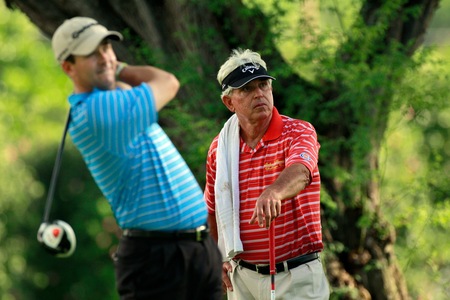
I'm starting to believe that Charles Warren is some type of mythical figure whose golf swing does not actually exist. On YouTube, there's a video of him for EyeLine Golf discussing putting...although he's a terrible putter. Oh, there's also a video of him at a golf clinic talking about protecting your skin against the sun.
Well, there is this video...of Kyle Stanley...that relates to Warren's driving of the ball.
Warren is typically in the top-5 in my Advanced Total Driving metric. He does everything well with the driver. He hits it long, generaters a lot of clubhead speed (117 mph), he launches it nicely, has perfect amount of spin rate, hits fairways and doesn't miss too many drives 'off the grid.'
Yet, not one video of his swing on YouTube. Maybe he's the Sidd Finch of golf.
3JACK
Anyway, if you're at a Tour event or can catch these players practicing, I would recommend getting the camera to see greatness in action.
SHORT GAME PLAY - Chris Riley
Over the past 5 years the best Short Game play has belonged to either Briny Baird or Chris Riley, both of whom routinely finish in the top-5 in my Short Game play metric. However, Baird had an 'off year' for him, finishing 21st in Short Game play in 2011. Riley consistently ranks near the top.
3-WOOD PLAY - George McNeill
McNeill led the Tour in 2011 in shots from 250-275 yards. McNeill's overall metrics were not all that great in 2011. However, I believe his ability with the 3-wood probably helped him keep his card as he could use that to chew up par-5's and play par-4's where driver off the tee is not feasible well. Take a look at this amazing video of Gary Woodland.
Funny to hear the announcers say that the only other person to reach this green in two shots was...George McNeill.
PUTTING - Greg Chalmers
Last year, Chalmers commented on how he may not be a great ballstriker, but he was one of the world's best putters and he was right. In the last 3 years he has finished 8th, 5th and 5th in the Putts Gained metric. It's a good thing because he's a short hitter and doesn't strike the ball all that accurately. But, get him on the green and he becomes one of the greatest players in the world.
BIRDIE ZONE PLAY - Shane Bertsch
One of the things I have discovered is that Birdie Zone players (75-125 yards) on Tour tend to be very consistent. Meaning, if you're a great Birdie Zone player on Tour one year, you will probably be one of the better Birdie Zone players year-after-year. And somebody like John Senden (184th from the Birdie Zone) likely will never do that well in this Zone.
Over time though, Shane Bertsch is continually a top-5 player from this range.
SAFE ZONE PLAY - Alex Cejka
Cejka routinely finishes in the top-10 in shots from the Safe Zone (125-175 yards). He's not very long, but a very underrated ballstriker on Tour.
DANGER ZONE PLAY - Jason Bohn
Bohn is another underappreciated ballstriker on Tour and typically finishes very strong in the Danger Zone. In fact, his ballstriking metrics in 2009 were better than Tiger Woods and Sergio Garcia. Not many videos of Bohn's swing on YouTube, which is a shame.
ADVANCED TOTAL DRIVING - Charles Warren
I'm starting to believe that Charles Warren is some type of mythical figure whose golf swing does not actually exist. On YouTube, there's a video of him for EyeLine Golf discussing putting...although he's a terrible putter. Oh, there's also a video of him at a golf clinic talking about protecting your skin against the sun.
Well, there is this video...of Kyle Stanley...that relates to Warren's driving of the ball.
Warren is typically in the top-5 in my Advanced Total Driving metric. He does everything well with the driver. He hits it long, generaters a lot of clubhead speed (117 mph), he launches it nicely, has perfect amount of spin rate, hits fairways and doesn't miss too many drives 'off the grid.'
Yet, not one video of his swing on YouTube. Maybe he's the Sidd Finch of golf.
3JACK
Subscribe to:
Posts (Atom)